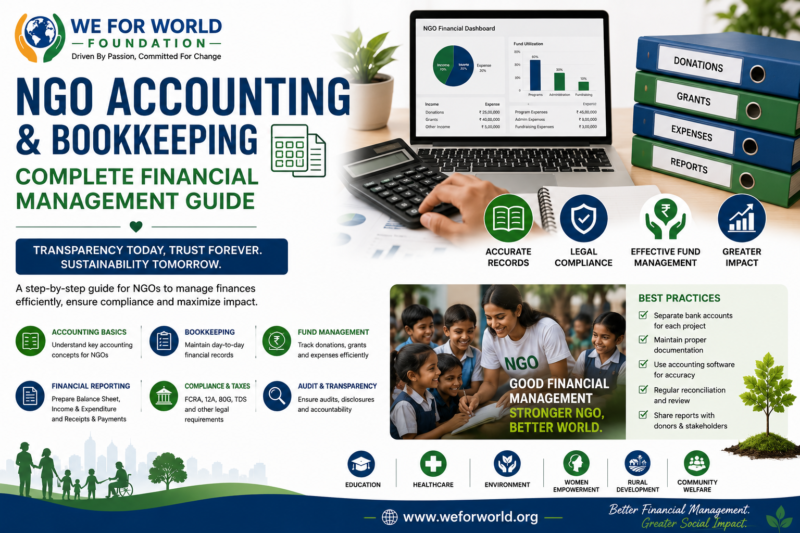
When people think about running an NGO, they often picture community projects, awareness campaigns, volunteers, and creating positive social change. However, behind every successful nonprofit is something equally important—strong financial management.
Whether your NGO receives donations from individuals, CSR funding from companies, government grants, or support from charitable foundations, every rupee should be managed with care. Proper accounting and bookkeeping help your organization stay transparent, comply with legal requirements, and earn the trust of donors and stakeholders.
Many NGOs believe accounting is only necessary during audits or at the end of the financial year. In reality, maintaining accurate financial records from day one makes it much easier to manage projects, prepare reports, apply for grants, and demonstrate how funds are being used to create real impact.
The good news is that NGO accounting doesn’t have to be complicated. With the right systems, clear processes, and consistent record-keeping, even small nonprofit organizations can manage their finances effectively.
In this guide, we’ll explain everything you need to know about NGO accounting and bookkeeping in simple language. From understanding the basics to maintaining financial records, preparing budgets, and following best practices, this article will help you build a stronger financial foundation for your NGO.
No matter how big or small your organization is, financial transparency is one of the biggest factors that determines its credibility. Donors, CSR partners, grant-making organizations, and even government authorities want to know that funds are being used responsibly and for the intended purpose.
Good accounting is not just about recording income and expenses—it helps your NGO make better decisions, plan future projects, monitor budgets, and prepare for audits without unnecessary stress.
Some of the biggest benefits of maintaining proper accounting records include:
Think of accounting as the backbone of your NGO. Just as your mission drives your work, a well-managed financial system ensures your organization can continue making an impact for years to come.