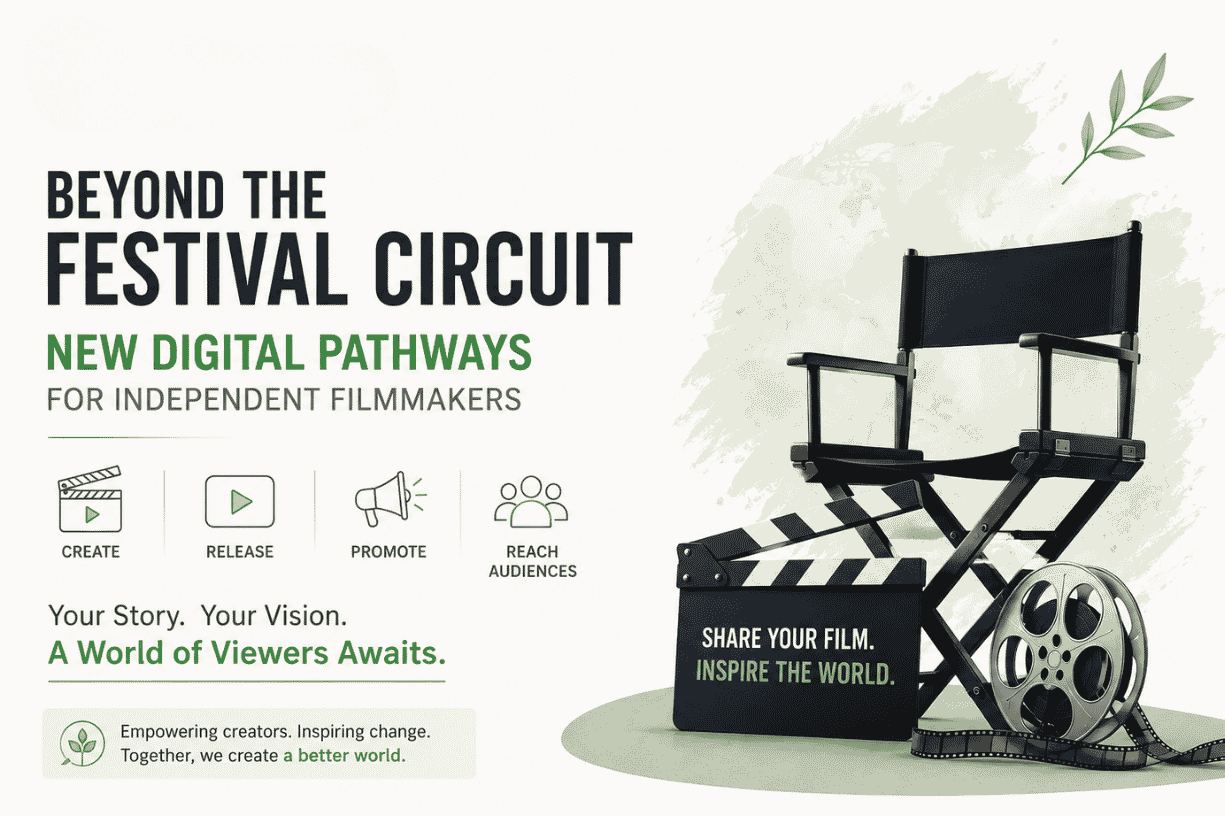
Every year, thousands of short films, documentaries, music videos and independent productions are created by emerging filmmakers. Many of these projects receive recognition at festivals but struggle to reach viewers beyond the festival circuit. Limited distribution opportunities, marketing budgets and access to established platforms can make it difficult for new creators to build an audience.
The growth of digital platforms is gradually changing this.
YouTube and other digital platforms have made it possible for independent creators to reach audiences without relying entirely on traditional theatrical or television distribution.
However, simply uploading a film online does not necessarily mean people will discover it.
For emerging filmmakers, a structured release can provide additional visibility, editorial exposure and an opportunity to present their work to an established audience.
This is where festival-backed digital initiatives are beginning to play an interesting role.
One such initiative is the DPIFF Release Program, introduced by the Dadasaheb Phalke International Film Festival (DPIFF) for independent creators.
The program provides a pathway for selected projects to be released through DPIFF’s official YouTube ecosystem, alongside promotional and editorial support.
The program currently accepts projects including short films, documentaries, music videos and animated films.
Creators submit their project and pay a one-time release fee of ₹10,000. Each paid submission is then reviewed by DPIFF for release. If a project is not approved for release, the full release fee is refunded.
For approved projects, the program includes a digital release on DPIFF’s official YouTube channel along with promotional opportunities, a dedicated editorial feature, a recommendation certificate and other digital visibility initiatives.
The arrangement is also described as non-exclusive, meaning filmmakers retain ownership of their work and can continue to distribute their projects through other channels, subject to the applicable terms.
Filmmakers interested in understanding the program can review the official DPIFF Release Program page for current eligibility, submission requirements and terms.
For a new filmmaker, distribution can be as important as production.
A film may have strong storytelling, performances and technical quality, but without an audience, its potential impact can remain limited.
Digital release initiatives can help bridge this gap by bringing together three important elements:
Content. A completed film or creative project.
Platform. A recognised digital channel through which audiences can discover the work.
Promotion. Editorial and social communication that can help introduce the project to potential viewers.
This does not replace film festivals, theatrical distribution or traditional media. Instead, it provides another route for creators who want their work to continue travelling after—or alongside—the festival journey.
Creators should also approach any distribution or release opportunity carefully.
Before submitting a project, filmmakers should ensure that they have the necessary rights for their film, including music, archival footage, photographs, performances and other third-party material.
They should also understand:
Understanding these terms helps creators make informed decisions about where and how their work is distributed.
The independent film ecosystem is evolving.
The traditional journey—make a film → submit to festivals → wait for distribution—is no longer the only path available to creators.
Today, filmmakers can combine festivals, digital premieres, social media, creator communities and online distribution to build audiences over time.
For young and emerging filmmakers, this can be particularly valuable. A short film may not have a large production budget, but it can still tell an important story, introduce a new filmmaker or create opportunities for future work.
The most important thing is that good independent work should have a chance to be seen.
As digital distribution continues to develop in India, initiatives that connect independent creators with audiences can become an increasingly important part of the country’s creative ecosystem.
For filmmakers, the journey doesn’t have to end when the festival screening ends. In many cases, that may simply be where the next audience begins.
This article is intended for general informational purposes. Filmmakers should review the applicable terms and conditions of any release or distribution program before submitting their work.