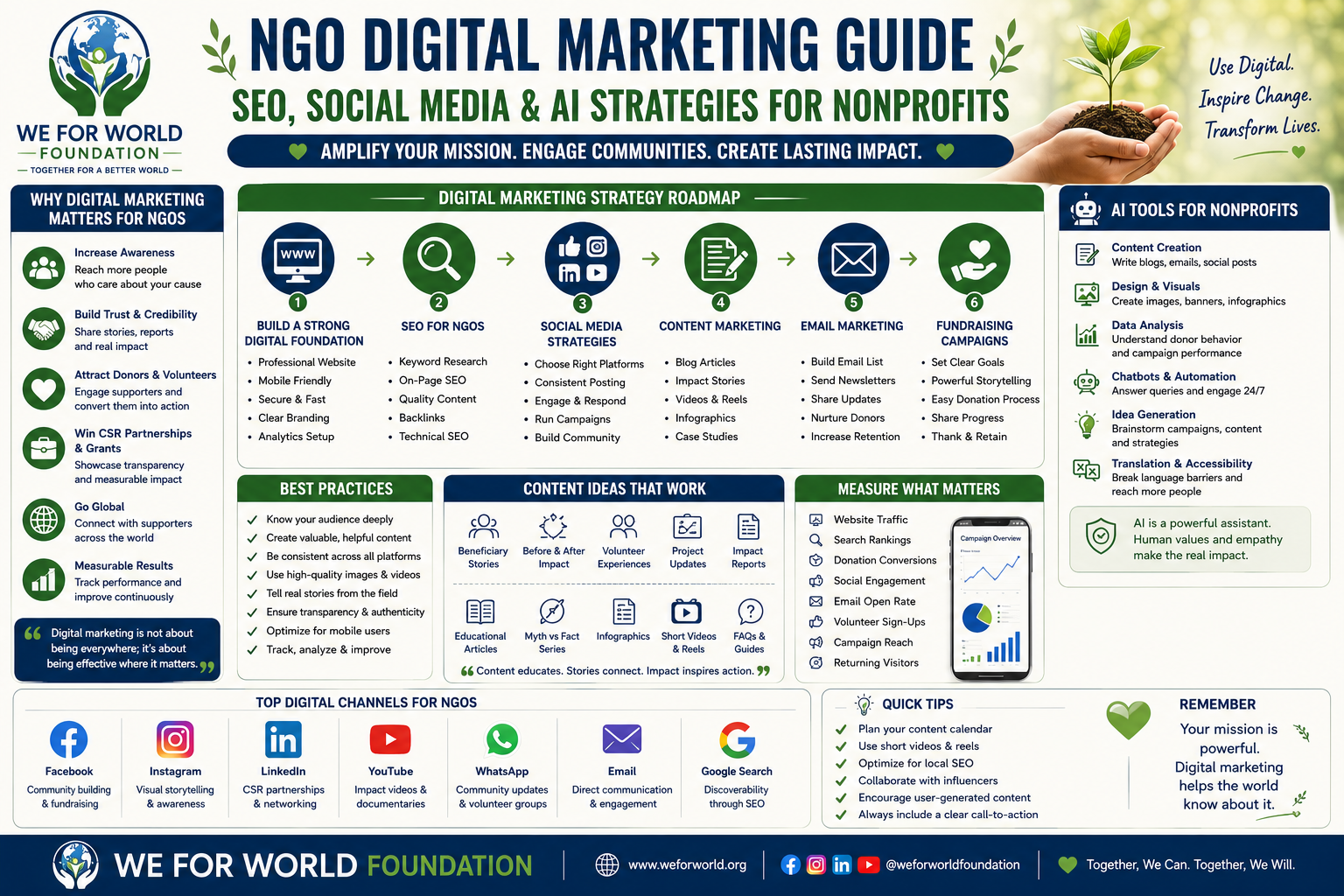
Digital marketing has transformed how nonprofits connect with donors, volunteers, beneficiaries, CSR partners, and grantmakers. Today, a well-planned digital strategy is no longer optional—it is essential for increasing awareness, building trust, raising funds, and creating lasting social impact.
Unlike traditional marketing, digital marketing allows NGOs to reach the right audience at the right time with measurable results and cost-effective campaigns. Whether you’re a small community-based organization or a large nonprofit, leveraging SEO, social media, content marketing, email campaigns, and Artificial Intelligence (AI) can significantly expand your reach.
This guide provides a practical roadmap to help NGOs build a powerful digital presence and maximize their impact.
Table of Contents
What is NGO Digital Marketing?
NGO digital marketing refers to the use of online channels and digital technologies to promote an organization’s mission, engage supporters, raise funds, recruit volunteers, and build long-term relationships with stakeholders.
Digital marketing channels include:
Together, these channels help NGOs communicate effectively and achieve measurable outcomes.
Why Digital Marketing Matters for NGOs
A strong digital presence enables NGOs to:
Digital marketing ensures your mission reaches people wherever they are.
Step 1: Build a Strong Digital Foundation
Before launching campaigns, ensure you have:
Your website should act as the central hub for all digital activities.
Step 2: Optimize Your Website for SEO
Search Engine Optimization (SEO) helps people discover your NGO through Google and other search engines.
On-Page SEO Best Practices
Content SEO
Create educational content such as:
Consistent, high-quality content improves search visibility and establishes thought leadership.
Step 3: Build a Powerful Social Media Presence
Social media allows NGOs to engage communities and inspire action.
Popular platforms include:
| Platform | Best Use |
| Community engagement and fundraising | |
| Visual storytelling and campaigns | |
| CSR partnerships and professional networking | |
| X (Twitter) | News, advocacy, and public awareness |
| YouTube | Educational videos and impact documentaries |
| Volunteer coordination and community communication |
Focus on meaningful engagement rather than simply increasing follower counts.
Step 4: Create Valuable Content
Content is the foundation of digital marketing.
Publish a mix of:
Aim to educate, inspire, and build trust—not just ask for donations.
Step 5: Use Email Marketing Effectively
Email remains one of the most effective communication channels for nonprofits.
Send regular newsletters featuring:
Personalized and relevant emails help strengthen long-term supporter relationships.
Step 6: Leverage Artificial Intelligence (AI)
AI can improve productivity and enhance communication without replacing human judgment.
Useful applications include:
Always review AI-generated content for accuracy, inclusiveness, and alignment with your organization’s values.
Step 7: Launch Digital Fundraising Campaigns
Digital fundraising makes donating convenient and scalable.
Successful campaigns often include:
Transparency about how funds will be used encourages confidence and repeat support.
Step 8: Encourage Community Engagement
Digital marketing is a two-way conversation.
Encourage supporters to:
Active engagement strengthens loyalty and expands your reach organically.
Step 9: Measure Performance
Use analytics to understand what is working and where improvements are needed.
Track metrics such as:
| Metric | Why It Matters |
| Website traffic | Measures online visibility |
| Search rankings | Indicates SEO performance |
| Donation conversions | Evaluates fundraising effectiveness |
| Social engagement | Measures audience interaction |
| Email open rate | Assesses newsletter effectiveness |
| Volunteer registrations | Indicates campaign success |
| Bounce rate | Reflects user experience |
| Returning visitors | Demonstrates audience loyalty |
Data-driven decisions lead to more effective campaigns.
Digital Marketing Checklist for NGOs
✅ Professional website
✅ SEO optimization
✅ Mobile-friendly design
✅ Active social media profiles
✅ Educational blog
✅ Email newsletter
✅ Secure online donation system
✅ Google Analytics or similar tracking tools
✅ High-quality visuals
✅ AI-assisted content workflow
✅ Monthly content calendar
✅ Regular impact reporting
Common Mistakes to Avoid
Many NGOs struggle with digital marketing because they:
Avoiding these mistakes helps build a stronger and more credible online presence.
Frequently Asked Questions
It helps increase visibility, build trust, attract supporters, and achieve fundraising and outreach goals more effectively.
Yes. SEO helps organizations of all sizes reach people searching for relevant causes, volunteer opportunities, or nonprofit information.
The best platform depends on your audience. Many NGOs benefit from using a combination of Facebook, Instagram, LinkedIn, YouTube, and WhatsApp.
No. AI is a tool that supports content creation and efficiency, but human oversight is essential for authenticity, ethics, and strategic decision-making.
Consistency is more important than frequency. Develop a realistic content calendar and publish high-quality content regularly.
Authentic impact stories, measurable results, financial transparency, educational resources, and beneficiary testimonials.
Yes. Email remains one of the highest-performing digital channels for donor engagement and supporter communication.
Absolutely. Videos are highly engaging and effective for storytelling, awareness campaigns, and showcasing impact.
By tracking website traffic, engagement, search rankings, donations, volunteer sign-ups, and other relevant performance indicators.
Treating digital marketing as occasional promotion instead of a long-term strategy focused on education, trust, and community engagement.
Final Key Takeaways
Conclusion
Digital marketing empowers NGOs to reach more people, amplify their mission, and create greater social impact than ever before. By combining a professional website, effective SEO, engaging social media, educational content, email marketing, and responsible AI adoption, nonprofits can strengthen their visibility, attract sustainable funding, and build meaningful relationships with supporters.
Success in digital marketing does not come from using every platform—it comes from understanding your audience, communicating consistently, and demonstrating genuine impact. Organizations that invest in digital capabilities today will be better equipped to inspire action, earn trust, and drive positive change in the years ahead.
Continue Your Learning with WFWF
The We For World Foundation (WFWF) Knowledge Centre is committed to helping NGOs, trusts, Section 8 companies, CSR professionals, donors, volunteers, and social entrepreneurs succeed in the digital age. Explore our expert guides on NGO registration, governance, branding, fundraising, compliance, AI adoption, digital transformation, and nonprofit leadership to strengthen your organization and maximize your social impact.