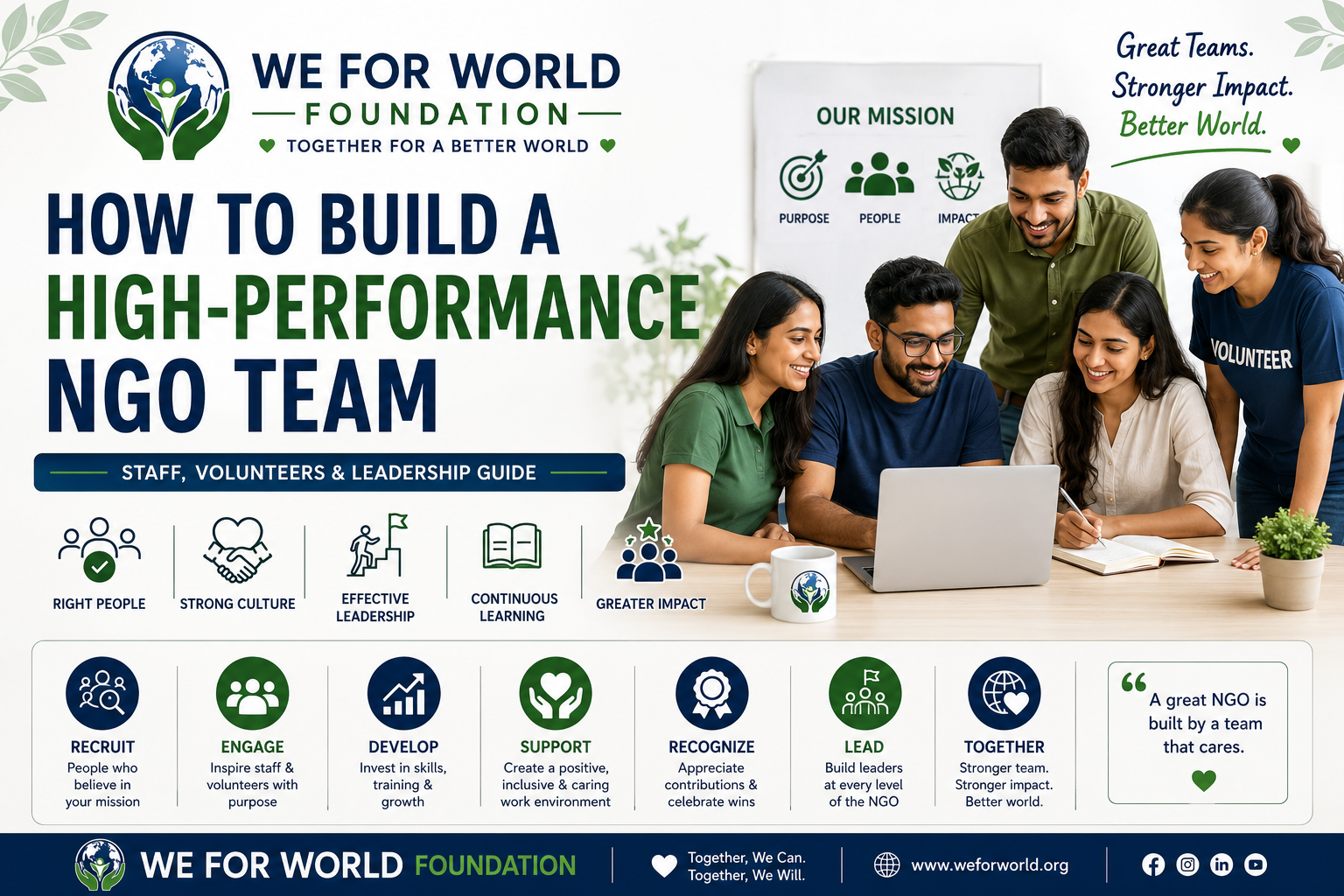
How to build a High-Performance NGO Team – The We for World Foundation Guide:
Behind every successful NGO is a dedicated team of professionals, volunteers, and leaders working toward a shared mission. While funding, programs, and partnerships are important, it is people who transform ideas into meaningful social impact.
Many NGOs struggle with high staff turnover, volunteer retention, unclear responsibilities, limited leadership development, and communication challenges. Building a high-performance team requires more than recruiting passionate individuals—it requires creating a culture of purpose, accountability, collaboration, and continuous learning.
This guide explains how NGOs can build, manage, and retain exceptional teams that deliver sustainable impact while fostering a positive and mission-driven workplace.
Table of Contents
Why People Are an NGO’s Greatest Asset
An NGO’s success depends on the commitment, skills, and integrity of its people. A motivated team improves project implementation, builds stronger community relationships, earns donor confidence, and enhances organizational credibility.
High-performing NGOs invest not only in programs but also in the growth and well-being of their employees and volunteers.
Build the Right Organizational Structure
As your NGO grows, establish a clear organizational structure with defined reporting lines and responsibilities.
A typical structure may include:
| Role | Key Responsibilities |
| Board of Directors/Trustees | Governance and strategic oversight |
| Chief Executive / Executive Director | Organizational leadership |
| Program Manager | Project planning and implementation |
| Finance Manager | Budgeting and financial management |
| HR & Administration | Recruitment and employee support |
| Communications & Fundraising | Public relations, donor engagement, branding |
| Monitoring & Evaluation Officer | Impact measurement |
| Volunteers | Community outreach and project support |
Clearly defined roles reduce confusion and improve accountability.
Step 1: Recruit People Who Believe in Your Mission
Hiring based only on technical skills is a common mistake.
Look for candidates who demonstrate:
Mission alignment often predicts long-term commitment better than qualifications alone.
Step 2: Create a Structured Recruitment Process
Develop a transparent hiring process that includes:
A fair recruitment process helps attract qualified candidates and strengthens your organization’s reputation.
Step 3: Build a Strong Volunteer Program
Volunteers are invaluable ambassadors for your NGO.
Recruit volunteers through:
Clearly communicate expectations, responsibilities, and the impact volunteers will make.
Step 4: Onboard Every Team Member
A structured onboarding process helps new staff and volunteers become productive more quickly.
Include:
Early engagement improves confidence and reduces turnover.
Step 5: Develop Leadership at Every Level
Leadership is not limited to senior management.
Encourage employees to:
Leadership development creates a stronger and more resilient organization.
Step 6: Build a Positive Organizational Culture
A healthy workplace encourages collaboration, respect, and innovation.
Promote a culture of:
Culture influences motivation, productivity, and employee satisfaction.
Step 7: Invest in Continuous Learning
Training strengthens both individual and organizational performance.
Provide learning opportunities in:
Encourage employees to share knowledge gained through workshops and conferences.
Step 8: Set Clear Goals and Measure Performance
Performance management should focus on development rather than punishment.
Set SMART goals that are:
Conduct regular performance reviews, provide constructive feedback, and recognize achievements.
Step 9: Prioritize Staff Well-being
NGO work can be emotionally demanding.
Support your team through:
Healthy teams are more productive and resilient.
Step 10: Recognize and Appreciate Volunteers
Volunteers contribute their time and skills without expecting financial rewards.
Show appreciation by:
Recognition encourages long-term engagement.
HR Policies Every NGO Should Have
Documented policies promote consistency and fairness.
Recommended policies include:
Review policies periodically and communicate them clearly to all team members.
Leadership Qualities Every NGO Needs
Effective nonprofit leaders demonstrate:
| Leadership Quality | Why It Matters |
| Integrity | Builds trust |
| Vision | Guides long-term direction |
| Empathy | Strengthens relationships |
| Communication | Aligns teams |
| Accountability | Encourages responsibility |
| Adaptability | Responds to change |
| Collaboration | Builds partnerships |
| Strategic Thinking | Supports sustainable growth |
Leadership is reflected in daily actions, not just titles.
Common HR & Volunteer Management Mistakes
Avoid these common challenges:
Addressing these issues early improves team effectiveness and retention.
High-Performance NGO Team Checklist
✅ Clear organizational structure
✅ Defined roles and responsibilities
✅ Transparent recruitment process
✅ Volunteer management system
✅ Structured onboarding
✅ HR policies
✅ Leadership development
✅ Performance reviews
✅ Staff training plan
✅ Recognition programs
✅ Employee well-being initiatives
✅ Continuous learning culture
Frequently Asked Questions
Strong HR practices help attract, develop, and retain talented people while ensuring fairness, compliance, and organizational effectiveness.
By clearly communicating the mission, providing meaningful opportunities, offering training, and recognizing volunteer contributions.
Purpose-driven work, supportive leadership, professional development, recognition, and opportunities to create meaningful impact.
Yes. Even simple written policies improve consistency, accountability, and employee confidence.
Regular feedback throughout the year, supported by formal reviews at appropriate intervals, helps employees grow and stay aligned with organizational goals.
Invest in leadership, career development, workplace culture, recognition, fair policies, and employee well-being.
Volunteers extend an NGO’s capacity by supporting programs, community outreach, events, advocacy, and fundraising activities.
Provide mentoring, leadership training, opportunities to lead projects, and encourage initiative at all levels.
A positive culture improves collaboration, engagement, productivity, and long-term retention.
Focusing only on recruitment while neglecting onboarding, development, recognition, and employee well-being.
Final Key Takeaways
Conclusion
A high-performance NGO is built on more than passion—it is built on people. By investing in effective recruitment, supportive leadership, volunteer engagement, professional development, and a healthy organizational culture, NGOs can create teams that are motivated, resilient, and capable of delivering meaningful change.
As your organization grows, remember that every employee and volunteer is an ambassador for your mission. Building a workplace where people feel valued, empowered, and inspired will not only strengthen your operations but also amplify your impact on the communities you serve.
Continue Your Learning with WFWF
The We For World Foundation (WFWF) Knowledge Centre is dedicated to helping NGOs, trusts, Section 8 companies, CSR professionals, donors, volunteers, and social entrepreneurs build stronger organizations through practical, expert-led guidance. Explore our resources on NGO governance, HR management, fundraising, compliance, digital transformation, leadership, and organizational development to empower your team and maximize your social impact.