Building a successful NGO is about much more than registering an organization or raising donations. It is about identifying a genuine social problem, designing sustainable solutions, creating transparent governance, building public trust, and delivering measurable impact over time.
Many NGOs begin with passion but struggle because they lack strategic planning, financial sustainability, legal compliance, or operational systems. A successful NGO combines compassion with professionalism.
This guide provides a practical roadmap for turning an idea into a credible, impact-driven organization.
Table of Contents
What is a Successful NGO?
A successful NGO is an organization that consistently creates positive social impact while maintaining transparency, accountability, financial sustainability, and public trust.
Success is not measured by the amount of donations received but by meaningful and measurable change in the communities it serves.
Successful NGOs generally have:
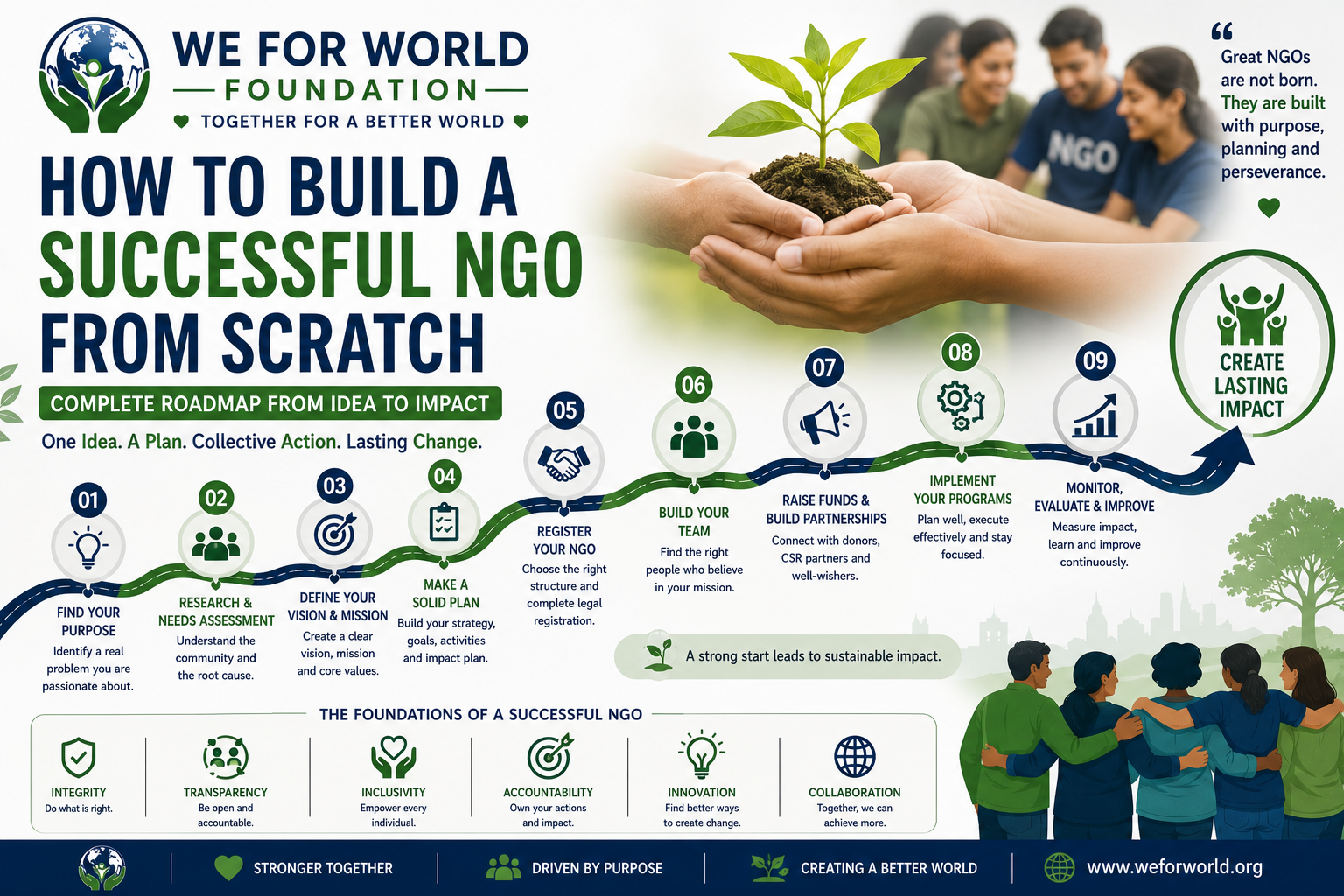
Step 1: Identify a Real Social Problem
Every successful NGO starts with solving one clearly defined problem.
Avoid starting with broad objectives such as “help everyone.”
Instead, focus on a specific issue.
Examples include:
A focused mission helps attract donors, volunteers, CSR partners, and government support.
Step 2: Define Your Vision and Mission
Your vision describes the future you want to create.
Example:
“A society where every child has equal access to quality education.”
Your mission explains how you will achieve it.
Example:
“Providing educational support, scholarships, digital learning, and community awareness programs.”
A clear vision and mission become the foundation for every decision your NGO makes.
Step 3: Choose Your Target Beneficiaries
Identify exactly who will benefit from your work.
Consider:
| Question | Example |
| Who? | Women, children, farmers |
| Where? | Rural Maharashtra |
| Why? | Limited education opportunities |
| How? | Training, awareness, scholarships |
The more specific your beneficiaries, the easier it becomes to design effective programs.
Step 4: Conduct Ground Research
Never assume you know what a community needs.
Conduct research through:
Research prevents duplication of efforts and helps identify genuine gaps.
Step 5: Build a Strong Founding Team
An NGO cannot succeed with one individual.
Create a diverse team with expertise in:
Define clear roles and responsibilities from the beginning.
Step 6: Register Your NGO
Choose the most suitable legal structure based on your objectives.
| Structure | Best For |
| Trust | Charitable activities managed by trustees |
| Society | Membership-based organizations |
| Section 8 Company | Large professionally managed nonprofits |
After registration, obtain applicable registrations and approvals required for your activities and fundraising strategy.
Maintain proper records including:
Legal compliance builds donor confidence.
Step 7: Prepare a Strategic Plan
Every NGO should prepare a three to five-year roadmap.
Include:
Without planning, even passionate organizations often lose direction.
Step 8: Develop Sustainable Funding Sources
Many NGOs fail because they depend on a single donor.
Diversify your income.
Possible funding sources include:
Diversification reduces financial risk.
Step 9: Build Trust Through Transparency
Trust is an NGO’s greatest asset.
Publish:
Transparency encourages repeat donations and long-term partnerships.
Step 10: Build Your NGO Brand
A strong brand increases credibility.
Your NGO should have:
Share stories that demonstrate real impact instead of simply requesting donations.
People support organizations they trust.
Step 11: Design Effective Projects
Every project should include:
Small pilot projects often provide valuable lessons before expanding to a larger scale.
Step 12: Monitor, Evaluate and Improve
Impact measurement is essential.
Track indicators such as:
Collect both quantitative and qualitative evidence.
Use feedback to improve future programs.
Building Partnerships
No NGO succeeds alone.
Collaborate with:
Partnerships increase reach while reducing costs.
Digital Transformation
Technology enables NGOs to work more efficiently.
Useful digital tools include:
Digital systems improve transparency and operational efficiency.
Common Mistakes New NGOs Make
Avoid these common pitfalls:
Recognizing these challenges early can save significant time and resources.
Best Practices for Long-Term Success
Successful NGOs consistently:
Professional management and accountability help transform a small initiative into a respected institution.
Frequently Asked Questions
While one person may initiate the idea, most legal structures require multiple members or trustees.
It depends on your objectives, governance model, and long-term plans.
NGOs may generate surplus income, but it must generally be reinvested in achieving their charitable objectives rather than distributed to members.
The timeline varies depending on the chosen legal structure and jurisdiction.
Fundraising becomes easier when your NGO demonstrates transparency, credibility, and measurable impact.
Many NGOs are required to maintain proper accounts and may need audits depending on applicable laws and thresholds.
By clearly communicating their mission, showcasing impact, maintaining transparency, and engaging consistently with supporters.
Strong governance improves accountability, compliance, decision-making, and public trust.
Success should be measured through outcomes, community impact, sustainability, and stakeholder confidence—not just the amount of funds raised.
Yes. Corporate partnerships, particularly through CSR initiatives, can provide funding, expertise, and volunteer support.
Final Key Takeaways
Conclusion
Building a successful NGO is a long-term commitment that requires purpose, planning, and perseverance. While passion may inspire the journey, lasting impact is achieved through sound governance, strategic execution, financial transparency, and continuous learning. Organizations that remain focused on community needs, embrace accountability, and adapt to changing challenges are better positioned to create meaningful and sustainable social change.
Whether your goal is to improve education, healthcare, environmental sustainability, or community development, success begins with a clear vision and grows through consistent action.
Continue Your Learning with WFWF
The We For World Foundation (WFWF) Knowledge Centre is dedicated to empowering NGOs, trusts, Section 8 companies, CSR professionals, donors, volunteers, and social entrepreneurs with reliable, practical, and easy-to-understand educational resources. Explore our guides on NGO registration, governance, compliance, fundraising, CSR partnerships, financial management, and impact measurement to strengthen your organization’s capacity and create lasting change.