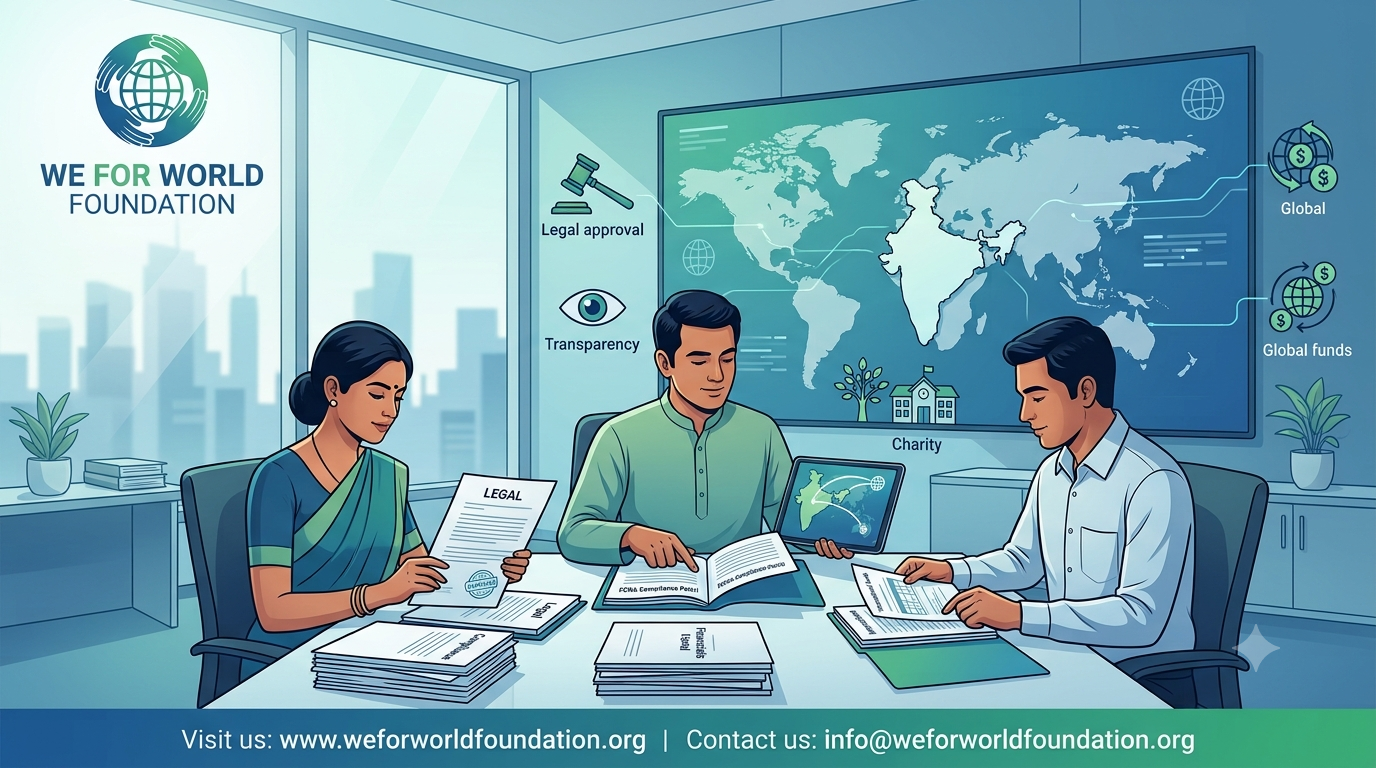
FCRA Registration for NGOs in India: Many NGOs in India work towards creating positive social change through education, healthcare, environmental protection, rural development, women empowerment, and community welfare.
As an NGO grows, it may receive support from international organizations, foreign donors, or global foundations.
However, NGOs cannot simply receive foreign contributions without following legal requirements.
This is where FCRA Registration becomes important.
The Foreign Contribution Regulation Act (FCRA) provides the legal framework that allows eligible NGOs in India to receive foreign contributions in a regulated and transparent manner.
Understanding FCRA can feel confusing, especially for new NGOs. Questions like:
are common among NGO founders.
This complete guide explains FCRA Registration for NGOs in India in simple language and covers the process, eligibility, documents, compliance requirements, and important points every NGO should know.
FCRA Registration is a legal approval that allows eligible NGOs, trusts, societies, and Section 8 companies in India to receive foreign contributions according to the rules established under the Foreign Contribution (Regulation) Act.
FCRA is regulated by the Ministry of Home Affairs (MHA), Government of India.
The main purpose of FCRA is to ensure:
Simply put:
FCRA registration gives eligible NGOs permission to accept foreign donations and use them according to approved objectives and legal requirements.
Many NGOs depend on different sources of funding to run their social programs.
These sources may include:
If an NGO wants to receive financial support from outside India, FCRA compliance becomes essential.
Without proper FCRA approval, receiving foreign contributions is not permitted under the applicable law.
FCRA registration allows eligible NGOs to receive support from:
Having proper compliance systems improves trust among:
International funding can help NGOs expand their projects and increase their social impact.
Examples:
FCRA compliance encourages NGOs to maintain:
An NGO generally needs FCRA approval if it wants to receive foreign contributions.
This may include:
Examples of foreign contributions include:
Foreign contribution generally means donations, transfers, or contributions received from foreign sources.
Examples include:
However, not every payment received from outside India automatically qualifies as foreign contribution. NGOs should carefully understand the applicable FCRA rules before accepting funds.
NGOs generally apply through two main routes:
This is generally considered for organizations that have an established track record of working in their chosen field.
Organizations that do not yet qualify for full registration may apply for permission to receive a specific foreign contribution for a specific purpose and from a specific donor.
An organization applying for FCRA approval should generally:
The exact eligibility conditions may change based on government notifications, so NGOs should verify the latest requirements before applying.
Many new NGOs make the mistake of immediately planning foreign funding before building proper systems.
A stronger approach is:
First:
✅ Register your NGO properly
✅ Create transparent financial systems
✅ Maintain project records
✅ Build credibility through genuine work
Then explore larger funding opportunities.
📌 Add infographic here:
“FCRA Journey for NGOs”
Design:
NGO Registration
↓
Build Track Record
↓
Prepare Documents
↓
Apply for FCRA
↓
Receive Approval
↓
Maintain Compliance
Image Alt Text:
FCRA registration process timeline for NGOs in India
Applying for FCRA registration requires proper preparation and accurate documentation.
A small mistake in information or documents can delay the approval process.
Follow these steps:
Before applying for FCRA, your organization should have a valid legal identity.
The NGO can be registered as:
Your registration documents should clearly mention your charitable objectives and activities.
Before applying, review whether your NGO meets the applicable requirements.
Important factors include:
NGOs should verify the latest eligibility requirements from official government sources before submitting an application.
Prepare all necessary documents before starting the online application.
Common documents include:
FCRA applications are submitted online through the official FCRA portal managed by the Ministry of Home Affairs.
The applicant needs to:
After submission, the application is reviewed by the concerned authorities.
The organization may be required to provide additional information or clarification if needed.
If approved, the NGO receives FCRA registration approval.
After receiving approval, the NGO must follow all applicable compliance requirements.
Proper documentation plays an important role in successful approval.
| Document | Purpose |
|---|---|
| Registration Certificate | Proof of NGO existence |
| PAN Card | Tax identification |
| Governing Body Details | Information about responsible persons |
| Activity Reports | Shows NGO work and impact |
| Financial Statements | Demonstrates financial transparency |
| Bank Details | For receiving contributions |
NGOs receiving foreign contributions must follow specific banking requirements under FCRA rules.
A designated FCRA bank account is required for receiving foreign contributions.
NGOs should maintain proper records of:
Proper financial management helps maintain compliance and donor trust.
Getting FCRA approval is not the end of the process.
NGOs must continue following compliance requirements.
Important responsibilities include:
Foreign contributions should be properly recorded separately from other funds.
Maintain:
FCRA-registered NGOs must submit required annual returns and reports according to applicable rules.
Missing compliance deadlines can create problems for the organization.
Foreign contributions should be used only for the objectives and activities permitted under applicable rules.
Using funds incorrectly can lead to penalties or cancellation of approval.
FCRA registration is not permanent.
Organizations must apply for renewal according to the applicable timeline and government requirements.
Before renewal, NGOs should ensure:
✅ Proper financial records
✅ Updated documents
✅ Timely filings
✅ Compliance with FCRA rules
Many NGOs submit applications without checking whether documents and information are complete.
Better approach:
Prepare and review all documents before submission.
Incomplete accounts can create compliance issues.
Maintain clear records from the beginning.
Foreign contributions must be used according to applicable rules and approved objectives.
Registration does not remove the responsibility of regular reporting.
Changes in:
may require proper reporting.
| Feature | FCRA Funding | Domestic Donations |
|---|---|---|
| Source | Foreign sources | Indian sources |
| Permission Required | Yes | Generally no FCRA approval required |
| Compliance Level | Higher | Normal NGO compliance |
| Reporting | Specific FCRA reporting | Regular financial reporting |
Before applying, check:
✅ NGO registration certificate available
✅ PAN details ready
✅ Proper office records maintained
✅ Activity reports prepared
✅ Financial statements available
✅ Governing body details updated
✅ Bank details prepared
✅ Application information verified
FCRA registration allows eligible NGOs in India to receive foreign contributions legally according to applicable regulations.
FCRA registration is handled by the Ministry of Home Affairs, Government of India.
Eligible NGOs can explore FCRA options depending on their situation and applicable requirements.
No. It is required when an NGO wants to receive foreign contributions.
NGOs must follow FCRA requirements before accepting foreign contributions.
The timeline depends on application processing, document accuracy, and government review.
Yes, eligible Trusts can apply for FCRA approval.
Yes, eligible Section 8 Companies can apply.
Yes, FCRA registration requires renewal according to applicable rules.
Non-compliance can result in penalties, restrictions, suspension, or cancellation depending on the nature of the violation.
FCRA registration is an important step for NGOs that want to receive international support for their social work.
However, FCRA is not only about receiving foreign funds. It is about maintaining transparency, accountability, and responsible financial management.
A successful NGO builds trust through proper governance, accurate records, and genuine impact.
Before applying for FCRA registration, NGOs should understand the requirements carefully and maintain strong compliance practices from the beginning.