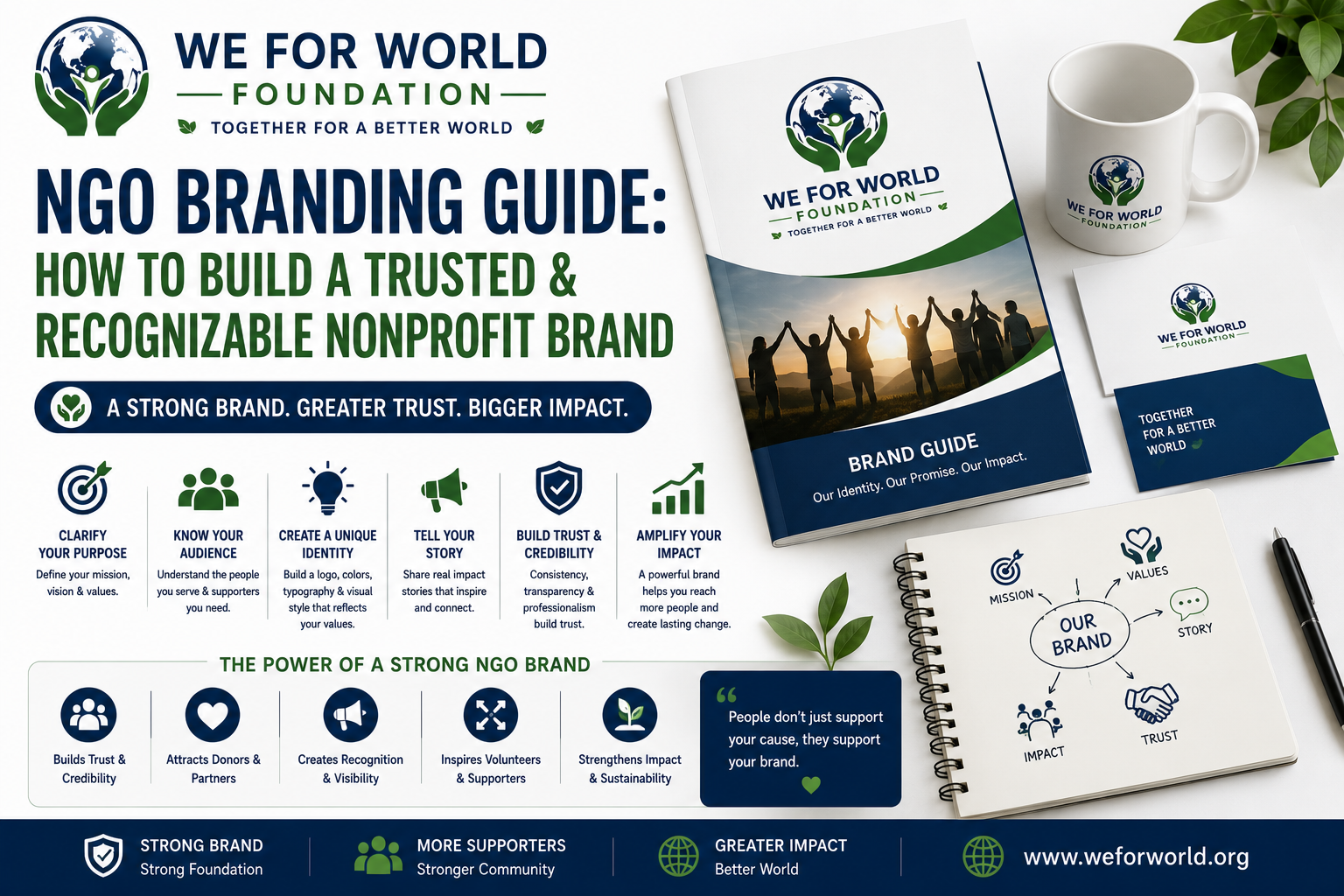
In the nonprofit sector, people don’t just donate to causes—they donate to organizations they trust. Whether you’re seeking donations, CSR partnerships, grants, volunteers, or community support, your brand plays a crucial role in influencing decisions.
Many NGOs believe branding is limited to designing a logo or choosing colors. In reality, branding is the complete perception people have about your organization. It reflects your mission, credibility, values, transparency, professionalism, and the impact you create.
A strong NGO brand helps people remember your organization, believe in your work, and confidently support your mission. This guide explains how to build a trusted and recognizable nonprofit brand that stands out in an increasingly competitive social sector.
Table of Contents
What is NGO Branding?
NGO branding is the process of creating a unique identity that communicates your mission, values, personality, and impact to the public.
Your brand is not just your logo—it’s the experience people have every time they interact with your organization.
Your brand includes:
Every interaction shapes public perception.
Why Branding Matters for NGOs
A recognizable brand builds confidence among stakeholders.
Strong branding helps NGOs:
People are more likely to support organizations they recognize and trust.
Benefits of a Strong NGO Brand
| Benefit | Impact |
| Higher credibility | Encourages donations and partnerships |
| Better recognition | Makes your NGO memorable |
| Stronger donor loyalty | Encourages repeat giving |
| Easier fundraising | Builds confidence among supporters |
| Greater volunteer engagement | Attracts passionate individuals |
| Improved media attention | Increases public awareness |
| Long-term sustainability | Strengthens organizational reputation |
Step 1: Define Your Brand Purpose
Before creating a logo or website, define why your NGO exists.
Ask yourself:
A clear purpose becomes the foundation of your brand.
Step 2: Create a Clear Mission and Vision
Your mission should explain what you do today.
Your vision should describe the future you want to create.
Example:
Mission: Empower underserved communities through education and skill development.
Vision: A society where every individual has equal opportunities to learn, grow, and succeed.
Consistency between your mission and actions builds credibility.
Step 3: Develop a Memorable Visual Identity
Visual consistency helps people recognize your NGO instantly.
Your brand identity should include:
Keep the design simple, clean, and meaningful.
Step 4: Create a Strong Brand Voice
Your communication style should remain consistent across every platform.
Your brand voice should be:
Avoid exaggerated claims or emotionally manipulative messaging. Authenticity builds long-term trust.
Step 5: Tell Stories That Create Emotional Connections
Facts inform people, but stories inspire action.
Share stories about:
Always obtain appropriate consent before sharing personal stories or photographs.
A compelling story demonstrates the human impact behind your mission.
Step 6: Build Trust Through Transparency
Trust is the strongest component of any nonprofit brand.
Publish and update:
Transparency reassures donors, grantmakers, and partners that your organization is accountable.
Step 7: Build a Strong Digital Presence
Your digital presence should reflect your professionalism.
Maintain:
Ensure branding remains consistent across all digital platforms.
Step 8: Build Relationships, Not Just Awareness
Branding goes beyond visibility—it is about meaningful engagement.
Engage with:
Respond promptly to questions, acknowledge contributions, and maintain regular communication.
Strong relationships strengthen your brand over time.
Step 9: Showcase Your Impact
People trust evidence more than promises.
Highlight measurable outcomes such as:
| Impact Indicator | Example |
| Children educated | 12,000+ |
| Trees planted | 75,000 |
| Villages reached | 150 |
| Women trained | 8,500 |
| Volunteers mobilized | 1,200 |
Complement statistics with photographs, testimonials, and case studies to provide context and authenticity.
Step 10: Maintain Brand Consistency
Consistency reinforces recognition.
Use the same:
A consistent identity makes your NGO appear more professional and reliable.
Measuring Brand Success
Branding is an ongoing process. Monitor indicators such as:
Regular evaluation helps identify opportunities for improvement.
Common NGO Branding Mistakes
Avoid these common errors:
Building a trusted brand requires consistency and authenticity over time.
NGO Branding Checklist
✅ Clear mission and vision
✅ Professional logo
✅ Consistent visual identity
✅ Defined brand voice
✅ Modern website
✅ Active social media presence
✅ High-quality photography
✅ Impact reports
✅ Annual reports
✅ Transparent financial disclosures
✅ Regular storytelling
✅ Consistent communication
✅ Strong stakeholder engagement
✅ Brand guidelines for internal use
Frequently Asked Questions
NGO branding is the process of creating a consistent identity that reflects an organization’s mission, values, credibility, and impact.
Branding builds trust, improves recognition, strengthens fundraising efforts, and attracts volunteers, CSR partners, and grantmakers.
No. A logo is only one part of your brand. Reputation, communication, transparency, and stakeholder experience are equally important.
Yes. Consistency, authenticity, and measurable impact matter more than organizational size.
Donors are more likely to support organizations they recognize, trust, and perceive as transparent.
Yes. Social media helps increase visibility, engage supporters, share impact stories, and build lasting relationships.
Inconsistent messaging and failing to demonstrate transparency and impact.
Review your brand periodically to ensure it reflects your mission, remains relevant, and stays consistent across all communication channels.
Absolutely. Authentic stories help people understand the real-world impact of your work and create emotional connections.
Brand reputation develops over time through consistent communication, transparency, meaningful impact, and positive stakeholder experiences.
Final Key Takeaways
Conclusion
A powerful NGO brand is built through purpose, consistency, transparency, and genuine impact. While visual identity helps people recognize your organization, it is your actions, communication, and accountability that earn lasting trust. Every report you publish, every story you share, and every interaction you have contributes to your reputation.
In a competitive nonprofit landscape, organizations with strong brands are better positioned to attract funding, inspire volunteers, secure partnerships, and expand their social impact. By investing in thoughtful branding today, your NGO can build stronger relationships and create meaningful change for years to come.
Continue Your Learning with WFWF
The We For World Foundation (WFWF) Knowledge Centre is dedicated to empowering NGOs, trusts, Section 8 companies, CSR professionals, donors, volunteers, and social entrepreneurs with practical, high-quality educational resources. Explore our comprehensive guides on NGO registration, governance, compliance, fundraising, digital transformation, nonprofit leadership, and organizational development to build a stronger, more impactful, and trusted nonprofit organization.