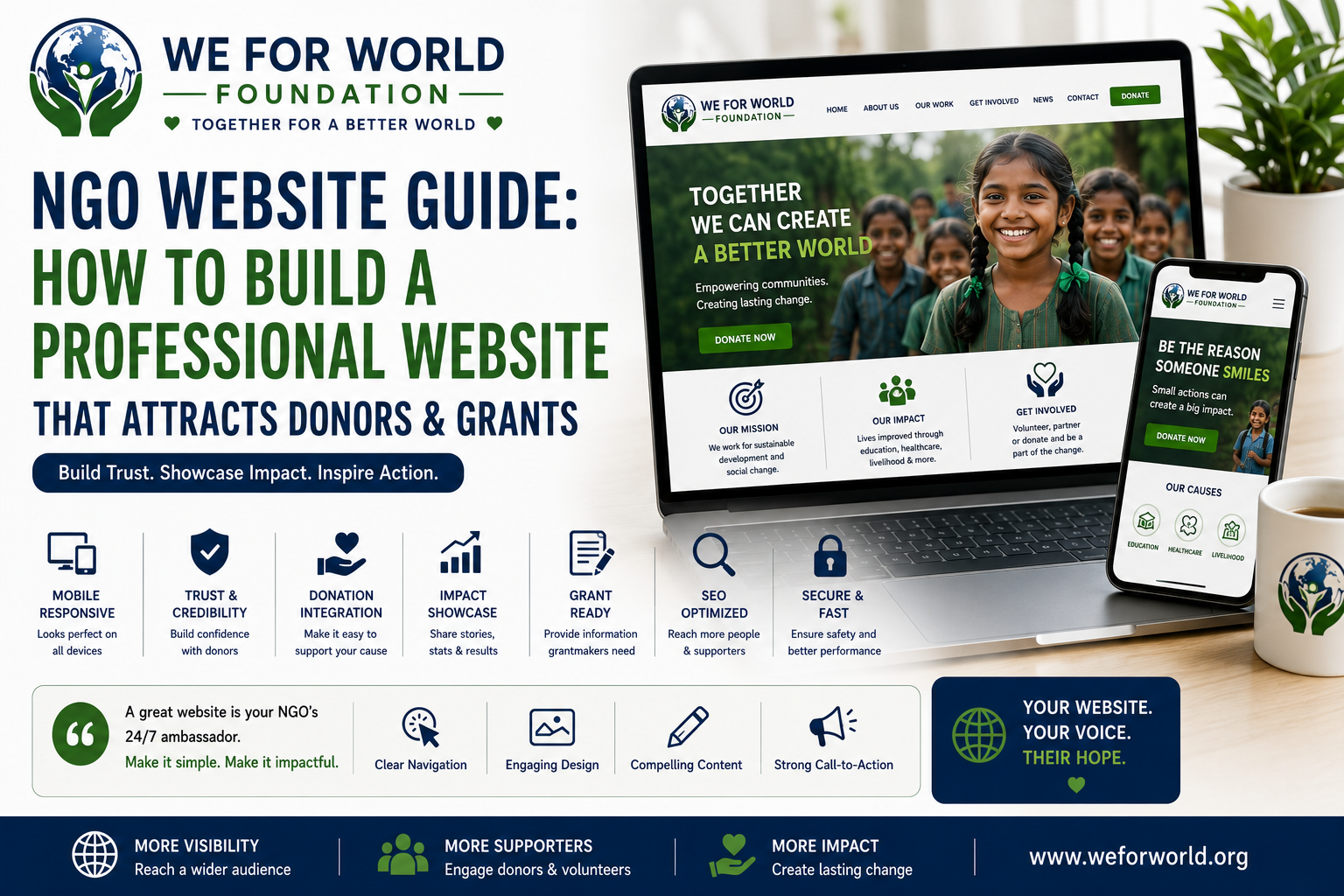
In today’s digital world, an NGO’s website is much more than an online brochure—it is the organization’s identity, credibility, fundraising platform, and communication hub. Whether someone wants to donate, volunteer, partner through Corporate Social Responsibility (CSR), apply for grants, or simply learn about your work, the first place they usually visit is your website.
Unfortunately, many NGOs lose valuable opportunities because their websites are outdated, incomplete, difficult to navigate, or lack essential information. A professional website helps build trust, demonstrates transparency, and encourages supporters to take action.
This guide explains how to build an effective NGO website that not only looks professional but also attracts donors, CSR partners, grantmakers, volunteers, and beneficiaries.
Table of Contents
Why Every NGO Needs a Professional Website
A website is often the first impression people have of your organization. Before donating or partnering with an NGO, most individuals and institutions research the organization online.
A professional website helps your NGO:
Think of your website as your NGO’s digital headquarters.
Benefits of a Professional NGO Website
| Benefit | Impact |
| Builds credibility | Increases donor confidence |
| Improves visibility | Helps people discover your NGO through Google |
| Enables online donations | Supports fundraising 24/7 |
| Attracts CSR partners | Demonstrates professionalism |
| Supports grant applications | Provides evidence of impact |
| Engages volunteers | Simplifies registrations and communication |
| Improves transparency | Publishes financial reports and annual reports |
Step 1: Choose the Right Domain Name
Your domain should be:
Examples:
Whenever possible, choose a .org domain as it is widely associated with nonprofit organizations.
Step 2: Select Reliable Web Hosting
Your website should load quickly and remain accessible at all times.
Choose a hosting provider that offers:
A slow or unreliable website can reduce donor confidence and search engine rankings.
Step 3: Plan Your Website Structure
A well-organized website makes it easier for visitors to find information.
A recommended structure includes:
Clear navigation improves user experience and encourages visitors to stay longer.
Step 4: Create an Engaging Homepage
Your homepage should answer three questions within a few seconds:
Include:
Avoid clutter and focus on clarity.
Step 5: Tell Your Story
People connect with stories more than statistics.
Your “About Us” page should explain:
Authentic storytelling builds emotional connections and trust.
Step 6: Showcase Your Impact
Donors and grantmakers want evidence that their contributions create real change.
Include measurable results such as:
| Metric | Example |
| Beneficiaries served | 15,000 children educated |
| Trees planted | 50,000 |
| Villages reached | 120 |
| Scholarships awarded | 2,500 |
| Volunteers engaged | 800 |
Support these numbers with photographs, videos, testimonials, and case studies.
Step 7: Build Donor Confidence
Transparency is one of the biggest factors influencing donations.
Publish:
The easier it is for visitors to verify your credibility, the more likely they are to support your work.
Step 8: Make Donations Simple
A complicated donation process discourages contributions.
Your donation page should include:
Keep the process simple, fast, and mobile-friendly.
Step 9: Optimize for Search Engines (SEO)
Search Engine Optimization (SEO) helps your website appear when people search for causes, NGOs, or volunteering opportunities.
SEO best practices include:
Consistent, high-quality content improves long-term visibility.
Step 10: Make Your Website Mobile-Friendly
A significant portion of users access websites through smartphones.
Ensure your website:
A responsive design enhances user experience and supports better search rankings.
Step 11: Protect Your Website
Cybersecurity is essential, especially for organizations collecting donations and personal information.
Implement:
Protecting donor data is both an ethical and operational responsibility.
Step 12: Keep Content Fresh
An outdated website can reduce credibility.
Update regularly with:
Fresh content also supports SEO and keeps visitors engaged.
Common Mistakes NGOs Should Avoid
Avoid these common website errors:
A professional website should be informative, trustworthy, and easy to use.
Website Checklist Before Launch
✅ Professional domain name
✅ Mobile-responsive design
✅ Fast loading speed
✅ Secure HTTPS connection
✅ Clear navigation
✅ About Us page
✅ Program pages
✅ Impact statistics
✅ Donation page
✅ Volunteer page
✅ Contact information
✅ Financial transparency documents
✅ Blog section
✅ SEO optimization
✅ Social media links
✅ Google Maps integration (if applicable)
Frequently Asked Questions
Yes. A professional website improves credibility, visibility, fundraising, and stakeholder engagement.
A .org domain is commonly preferred because it is widely recognized for nonprofit organizations.
Absolutely. Even a simple, well-designed website with clear information and transparency can create a strong impression.
Yes, provided they use secure payment gateways and comply with applicable legal and financial requirements.
Content should be reviewed regularly, with major updates whenever new projects, reports, or achievements are available.
Yes. SEO helps potential donors, volunteers, beneficiaries, and CSR partners discover your organization through search engines.
Annual reports, financial statements, impact stories, leadership details, and clear descriptions of programs.
Yes. Publishing educational articles and project updates improves SEO, demonstrates expertise, and keeps supporters informed.
Use authentic photographs, publish verified impact data, maintain transparency, and ensure the website is secure and regularly updated.
Trust. Every page should reinforce your organization’s credibility, mission, transparency, and measurable impact.
Final Key Takeaways
Conclusion
A professional NGO website is one of the most valuable investments an organization can make. It serves as a platform to share your mission, demonstrate accountability, showcase impact, and connect with people who want to support your cause. By focusing on transparency, user experience, quality content, and continuous improvement, your website can become a powerful engine for fundraising, grant applications, volunteer engagement, and social impact.
Whether you are launching a new NGO or modernizing an existing one, remember that your website reflects your organization’s values and professionalism. Build it with the same care and commitment that you bring to your mission.
Continue Your Learning with WFWF
The We For World Foundation (WFWF) Knowledge Centre is committed to empowering NGOs, trusts, Section 8 companies, CSR professionals, donors, and social entrepreneurs through practical, high-quality educational resources. Explore our comprehensive guides on NGO registration, governance, compliance, fundraising, digital transformation, CSR partnerships, financial management, and nonprofit leadership to strengthen your organization’s capacity and maximize its social impact.